At a glance
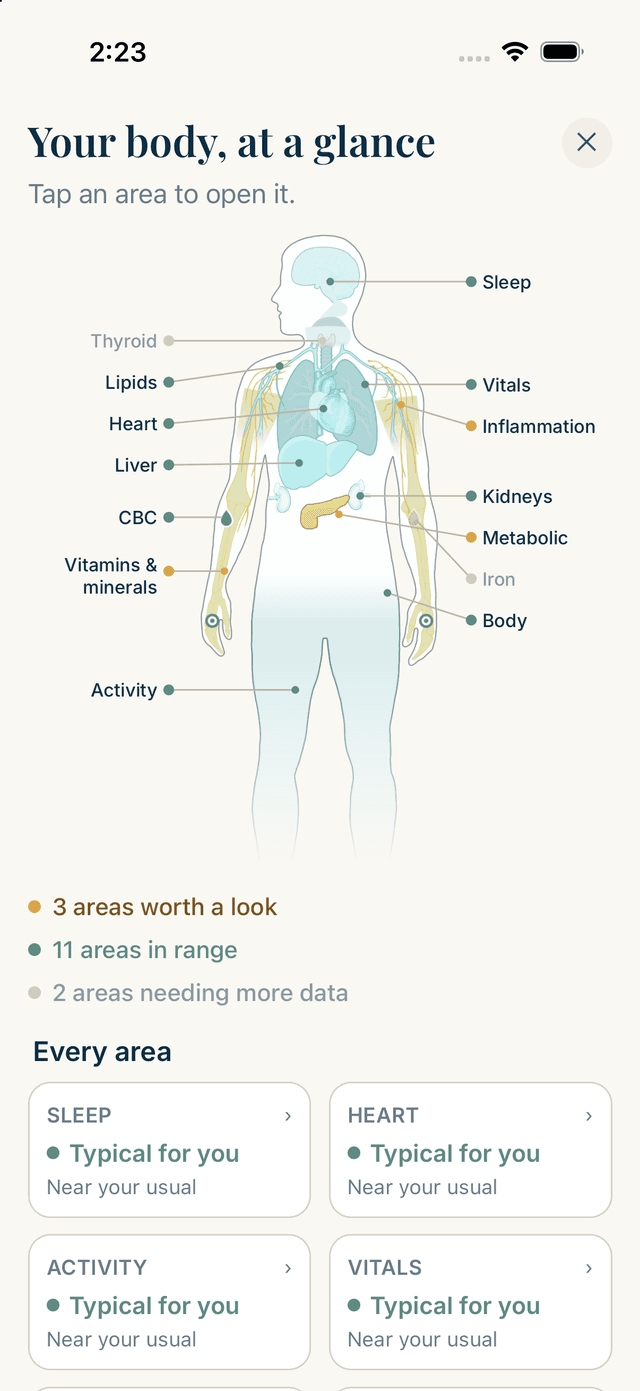
Your whole body, on one screen.
Every lab result and every wearable reading lands on one map of your body — lipids in the blood vessels, blood sugar at the pancreas, sleep at the brain, activity in the legs. Each area is colored by what your own numbers say, and one tap opens the results behind it.
In plain English
Every number, explained like a person would.
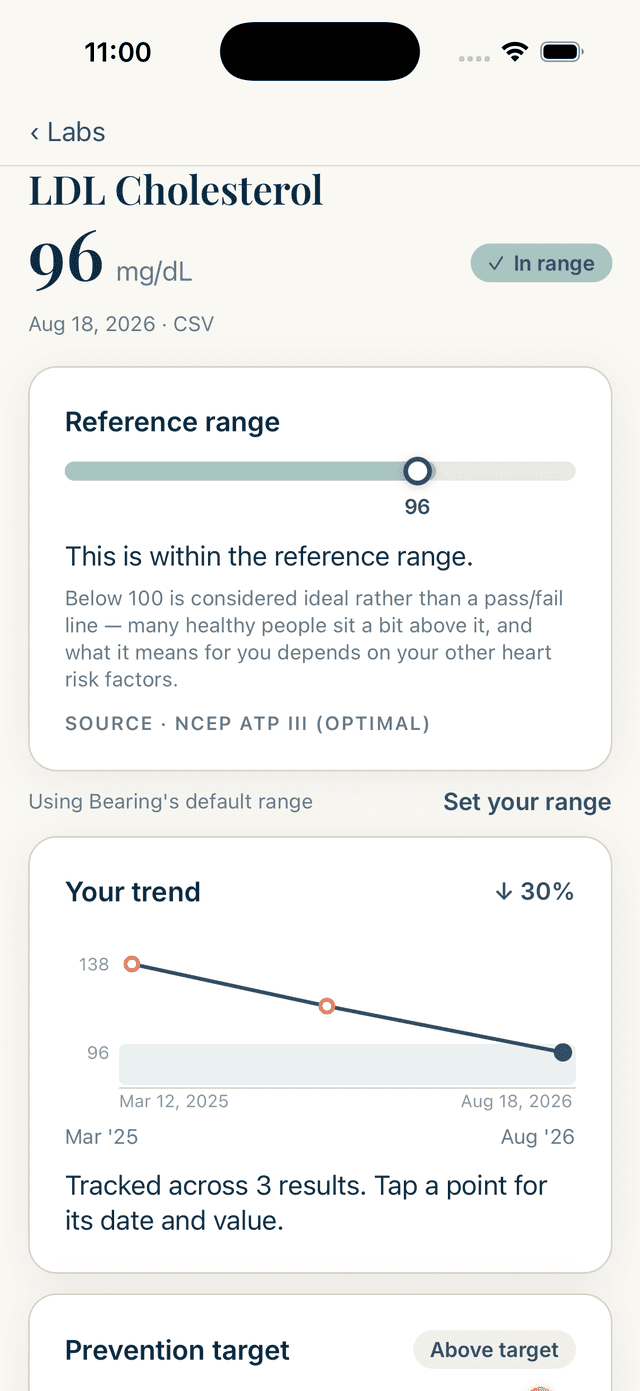
Bearing takes each result and tells you what it is, what it means for you, and what moves it — in the language you’d want from a friend who happens to know medicine. Every range it quotes names its source, so you can see who says so.
Written for your data
Observations about you, not about people in general.
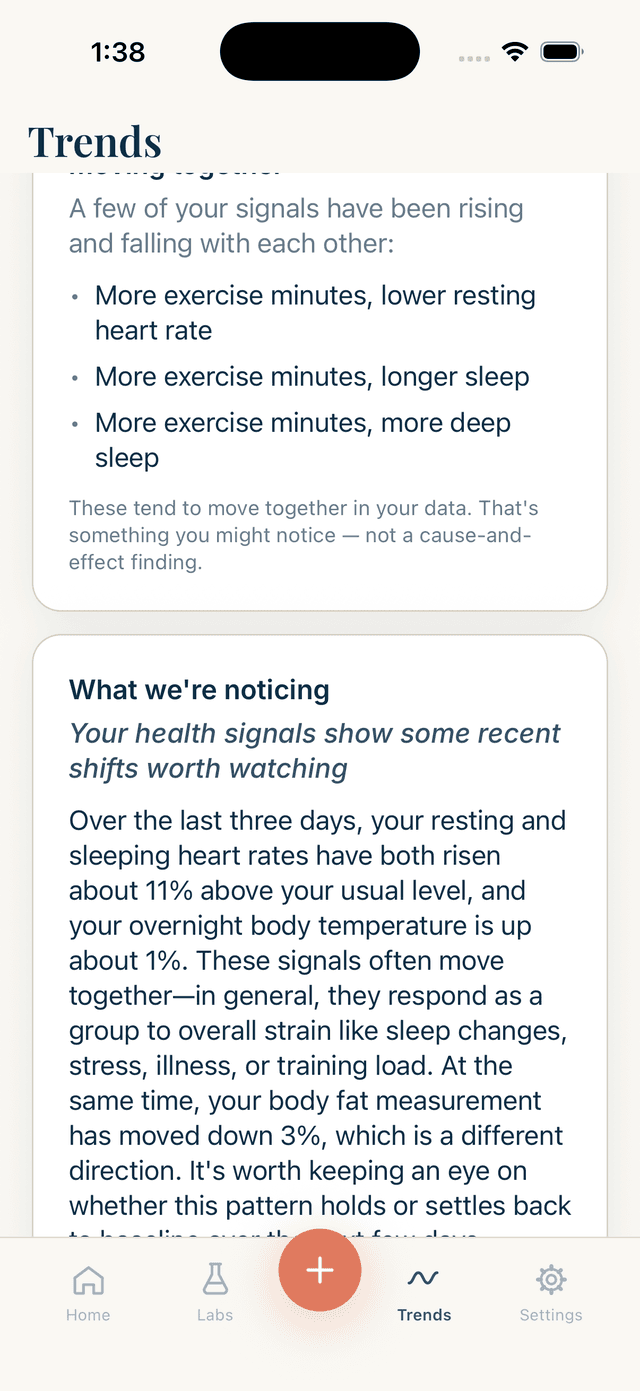
Bearing reads your own history and writes up what it sees — the kind of thing you’d never catch flipping between apps.
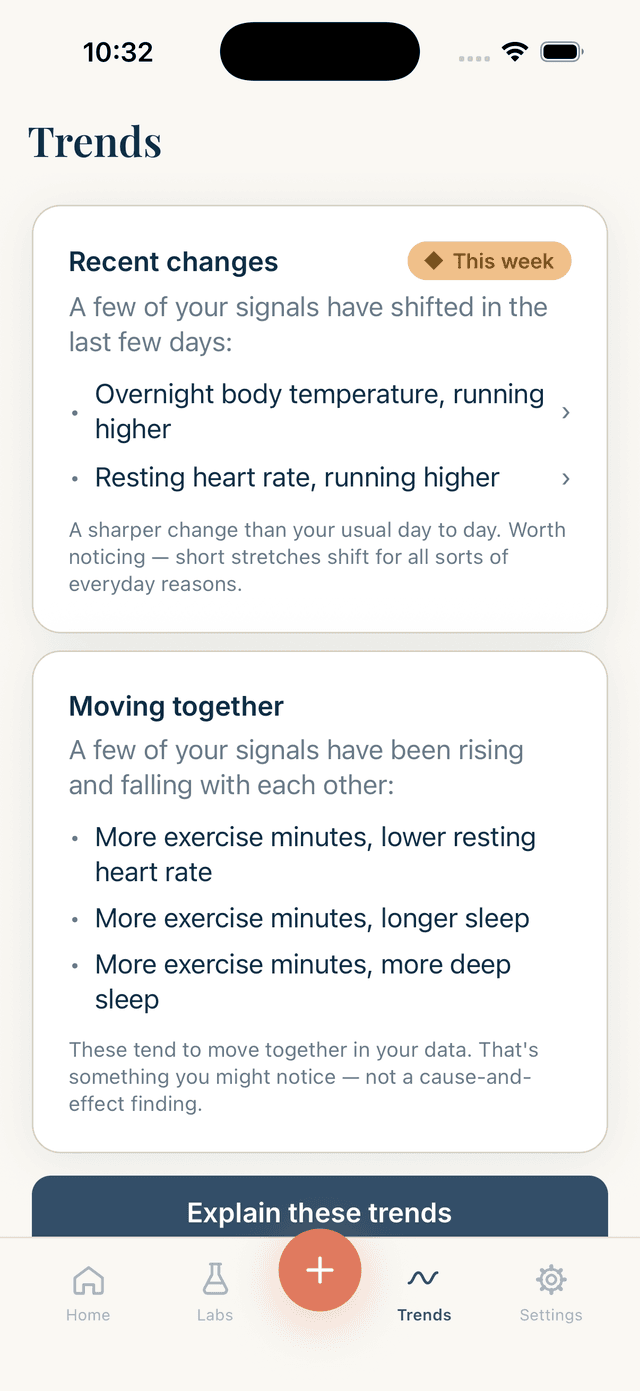
“Over the last three days, your resting and sleeping heart rates have both risen about 11% above your usual level, and your body temperature is up about 1%. These signals often move together.”
Written by Bearing, from one person’s data
Connections
What moves with what.
Bearing watches how your signals travel together and tells you plainly — carefully framed as something you might notice, never as cause and effect.
- More exercise minutes, lower resting heart rate
- More exercise minutes, more deep sleep
- Body temperature, running higher
Every single day
Your normal, not a textbook's.
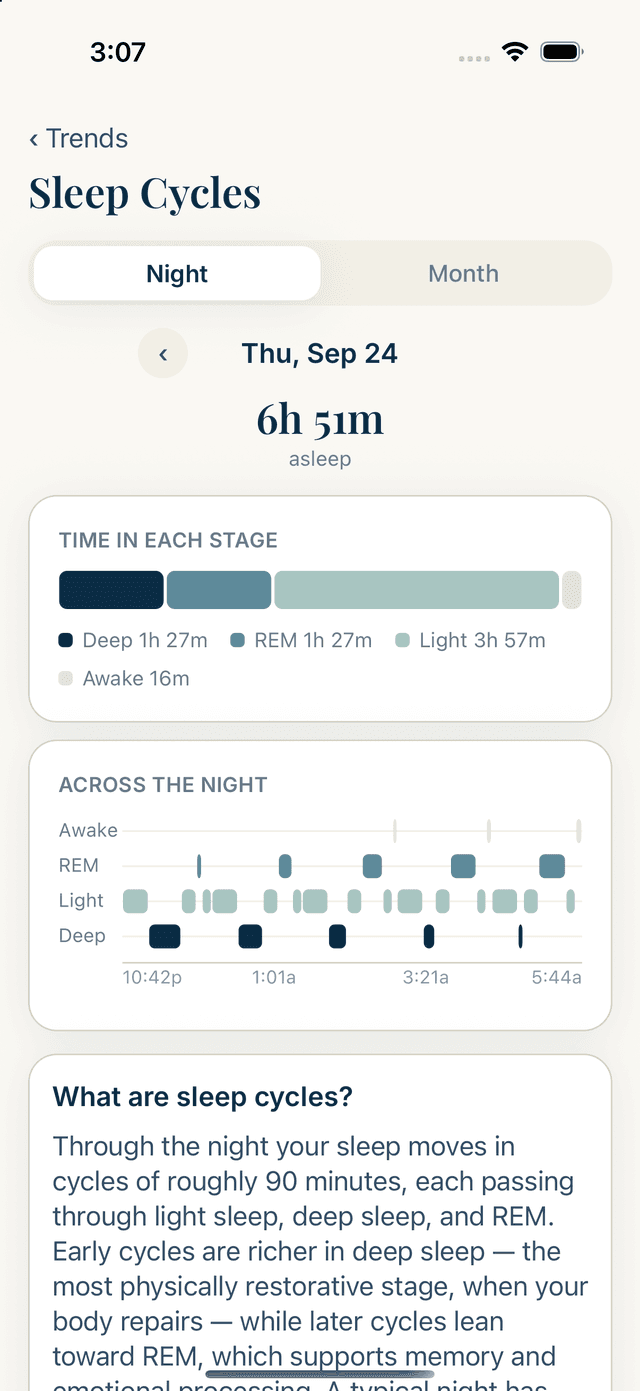
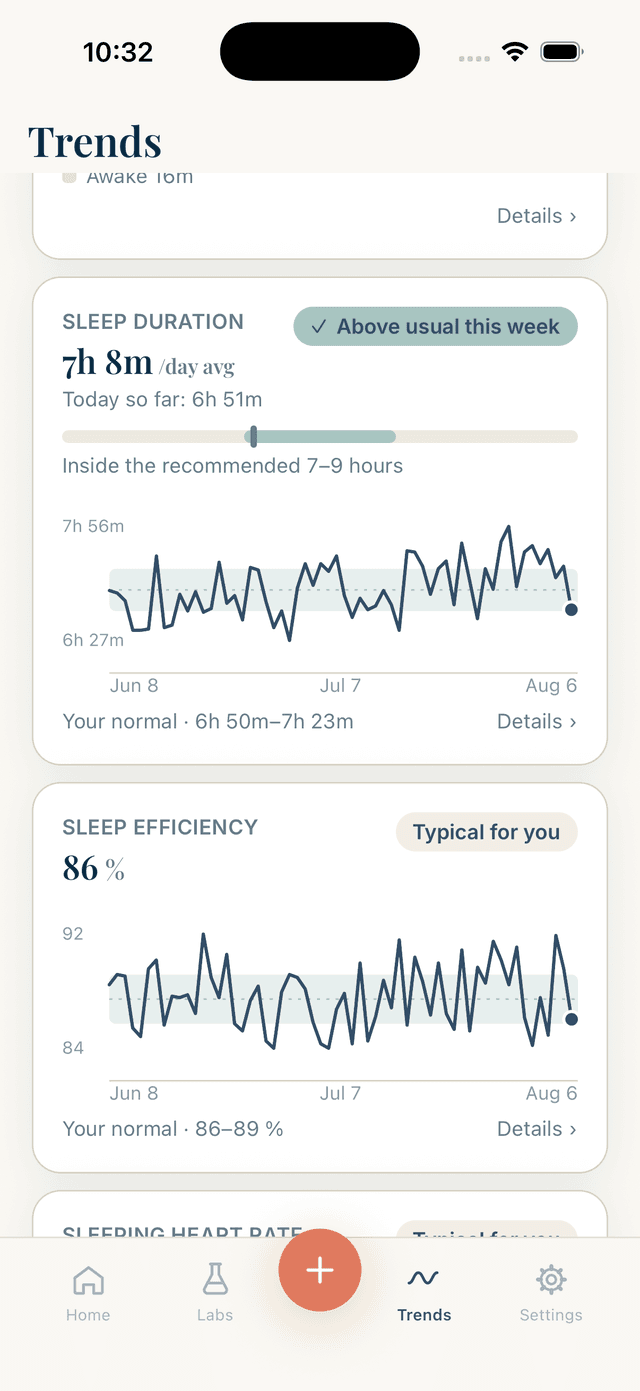
Bearing learns what’s typical for you and measures each day against that. “Above your usual” is a far more useful sentence than a number you’d have to go and look up.
Sleep duration, stages & efficiencyVO₂ maxResting heart rateHRVActivityBMI & body fatBlood pressureSpO₂and more
Weekly & monthly
Which direction are you actually going?
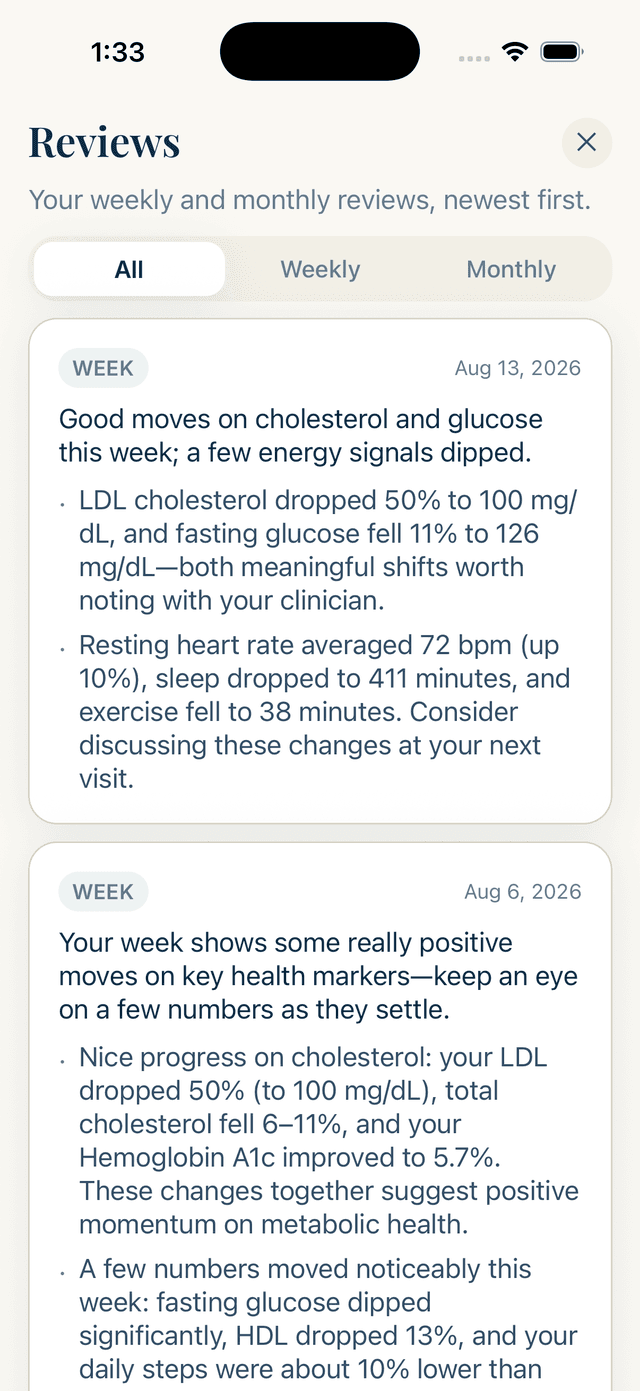
Day-to-day noise hides the trend. Every week and every month Bearing writes you a short review of what genuinely moved, what’s worth watching, and what went right — so you can see the shape of your health over time instead of guessing at it.
The fuller picture
And what you haven't measured yet.
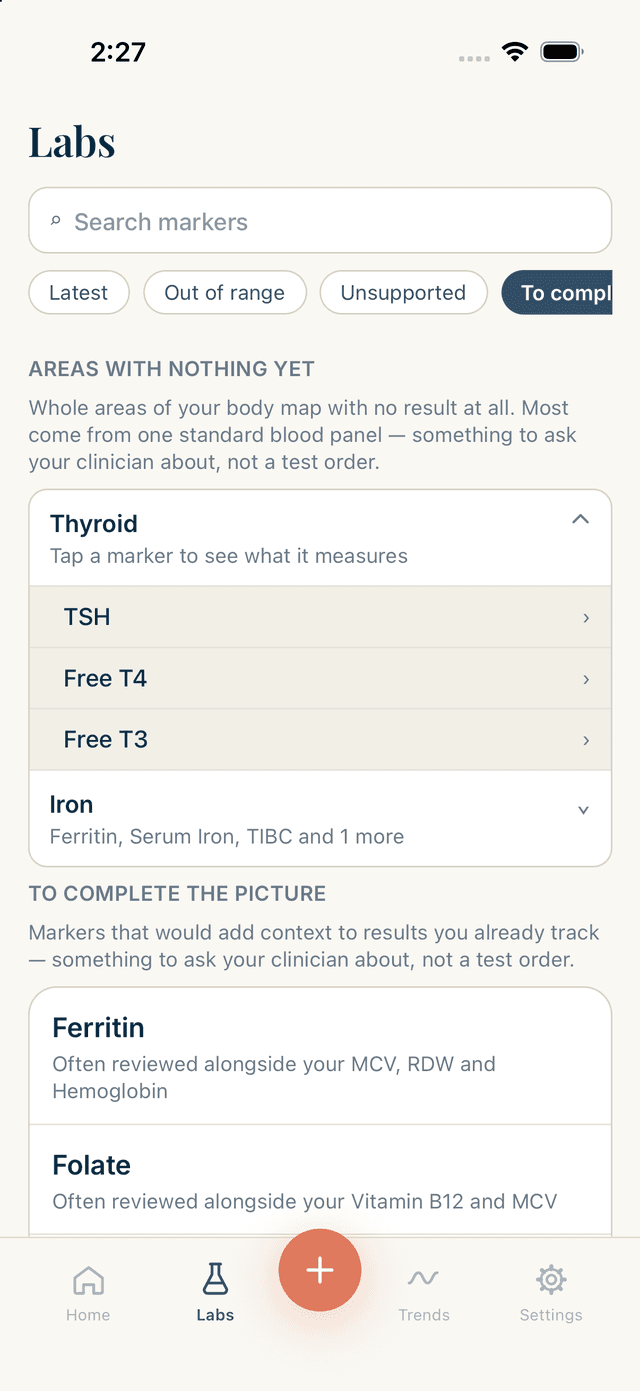
The grey areas on your map are the ones you have no results for. Bearing names the markers that would fill each one, and every marker opens a plain-English page on what it measures — so you can see why it’s worth asking about before your next blood draw.
“TSH, Free T4 and Free T3 would fill this in — worth asking your clinician about.”
Something to ask about, not a test order